So, last time we left off, we were probably contemplating about the meaning of water shortages in the rainy season, or maybe just the best way to avoid headaches. This time? We’re getting serious.
Walls, Supports, and Layout!
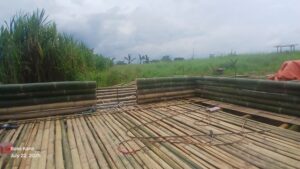
The Kubo build continues, marking significant advancements in the construction process. Following the successful laying of the oil soaked main joists, their pinning, the project has moved into the crucial phase of wall elevation and structural reinforcement.
Wall Elevation:
The team is currently focused on constructing the 50 cm wall elevation. And of course bamboo has no standard thickness, hence the wall became 60 cm IN AVERAGE!! This stage involves meticulous attention to detail to ensure the walls are straight, mostly; levelled, they are not due to natural bamboo growth; and structurally sound, yes it is. The measurements and alignment are critical for the overall integrity and aesthetics of the Kubo structure.
Floor Joists:
Additional floor joists are being added where the flooring will terminate. We needed an endpiece so that the flooring will not hang loose where its terminates against a wall. This step is essential for providing a sturdy and even surface for the plywood sheets. The placement and spacing of these joists are made to ensure optimal support and prevent any future sagging or unevenness of the floor.
Corner Support:
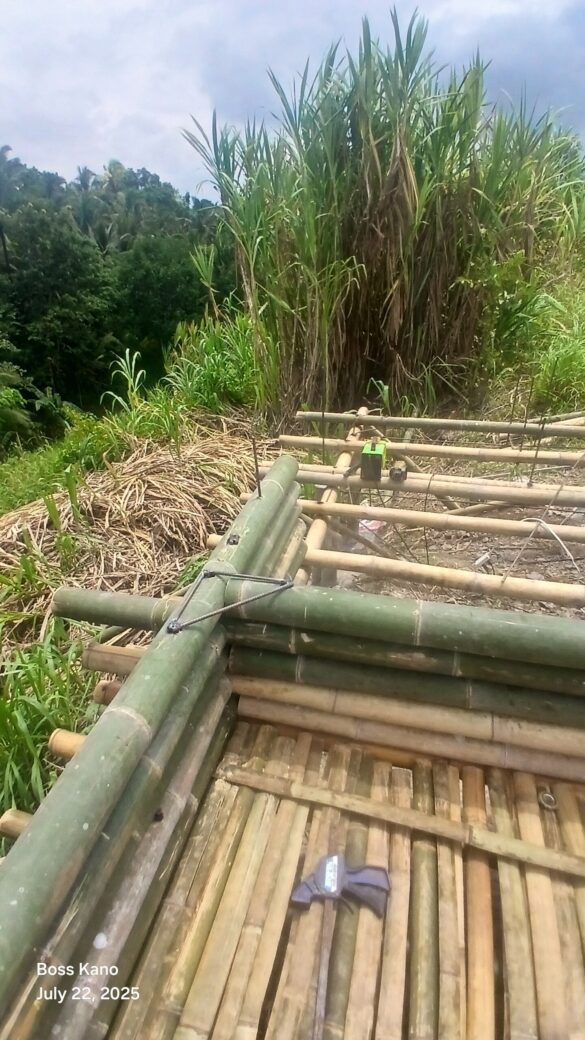
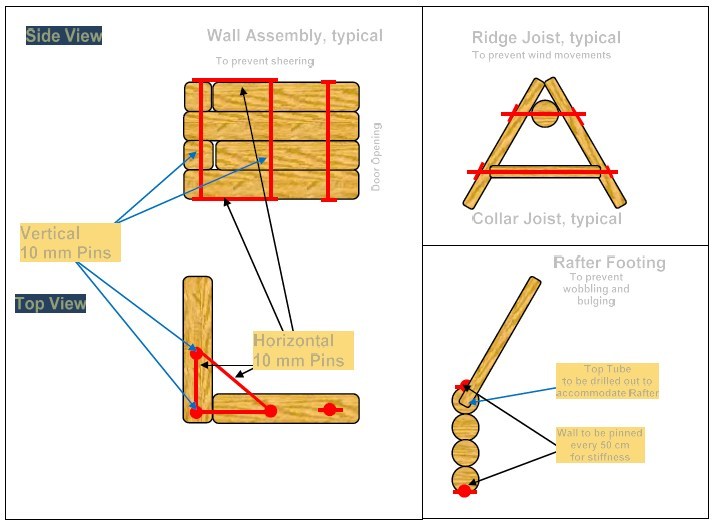
To enhance the stability and durability of the corners, the construction team is diligently attaching welded triangles. These triangular supports provide crucial horizontal reinforcement, distributing horizontal sheer forces and preventing potential weaknesses in the structure. These triangles are also attached and welded to vertical 10 mm pieces in order to guarantee a super stable corner. This method ensures the Kubo’s longevity and its ability to withstand heavy wind and rain.
So, there you have it.
Another thrilling installment in our Kubo adventure. Stay tuned for the next exciting episode, where we’ll probably argue about the best type of roof structures. It’s going to be epic. 😉
Kubo Chronicles: The Bamboo Ballet and the Stubby Wall Saga
Welcome back, dear readers, to the whimsical world of Kubo construction, where bamboo dreams come true and gravity is merely a suggestion! Today, we’re diving into the latest escapades of our Kubo build, where we’ve been busy crafting a tension grid that’s more reliable than your friend who promises to bring snacks to movie night but shows up empty-handed.
The Tension Grid: Keeping It Together
First things first, let’s talk about our tension grid. You see, we’ve built this marvelous contraption to ensure our Kubo doesn’t decide to take a spontaneous vacation down the cliff. Because, let’s be honest, no one wants their dream home to turn into a scenic slide into the abyss! With our tension grid in place, we can rest easy knowing that our structure is firmly anchored, like a cat on a sunny windowsill—content and unmovable.
Pinning It Down: The 10 mm Solution
Next up, we’ve drilled holes for 10 mm pins to hold our bamboo logs in place. Now, you might be wondering, “Why 10 mm?” Well, it’s the Goldilocks of pin sizes—not too big, not too small, but just right for keeping our bamboo logs from playing a game of hide and seek. These pins are like the bouncers of our bamboo party, ensuring that only the most well-behaved logs get to stay in the Kubo.
The Stubby Wall: A Head Above the Rest
Now, let’s get to the pièce de résistance: the 50 cm stubby wall! This little beauty is not just a wall; it’s a statement. Think of it as the stylish hat that gives our A-Frame a bit of flair. With this extra height, we’re not just adding headroom; we’re elevating our living experience! Imagine being able to stand up straight without doing the limbo every time you enter your cozy abode. It’s like upgrading from a cramped elevator to a spacious penthouse suite!
Welding and Hauling: The Bamboo Ballet
Today’s agenda includes the thrilling duo of welding and hauling bamboo. Yes, you heard that right! We’re not just building; we’re putting on a show! Picture this: our team, clad in welding gear, performing a synchronized dance as we haul bamboo logs like they’re the latest dance craze.
And speaking of welding, did you know that there’s a new trend in the bamboo world? TWI has partnered with Zero Glue Bamboo to explore welding bamboo without adhesives or fasteners. It’s like the bamboo version of a no-strings-attached relationship—just pure, unadulterated bonding!
The First Part, Welding the Grid
The Second Part, Building the Stub Wall
The Grand Finale
As we continue our Kubo build, we’re reminded that every weld, every pin, and every stubby wall is a step closer to our bamboo paradise. So, whether you’re a seasoned builder or just someone who enjoys watching DIY shows while snacking on popcorn, remember that building a Kubo is not just about the structure; it’s about the journey, the laughter, and the occasional mishap that makes for great stories later.
Stay tuned for more updates from the Kubo construction site, where the bamboo is always fresh, the walls are getting taller, and the adventures are just beginning! What do you think will happen next? Will we encounter a rogue bamboo log? Or perhaps a surprise visit from a curious cobra? Only time will tell! 🏡✨
Addressing Water Scarcity in San Francisco: A Proactive Solution
The persistent issue of inconsistent water supply in Purok 4, Barangay San Francisco, Philippines, necessitates a thorough examination of the underlying causes and the implementation of sustainable solutions. The current situation, marked by monthly supply interruptions, points to potential challenges such as power constraints at the river pump, inadequate infrastructure, or operational inefficiencies. While the exact cause remains unclear, the reliance on an operating schedule rather than addressing the root of the problem highlights a critical need for proactive measures.
The core of the issue appears to be a combination of factors, including potential operational deficiencies and a possible lack of investment in modern, reliable water management systems. This situation underscores the importance of moving beyond dependency on existing systems and embracing self-reliant solutions.
A Sustainable Approach: Rainwater Harvesting
In response to this challenge, a practical and sustainable solution is proposed: the implementation of a rainwater harvesting system. This project, following the successful A-Frame Kobos initiative, focuses on leveraging the abundant rainfall experienced in the region.
Help those people who are willing to be helped
The Rain Water Collector
The project involves covering half of the chicken area with roofing, serving two primary purposes:
Shading: Providing a cooler environment for the poultry.
Rainwater Collection: Capturing rainwater for Jessie’s Sunshine Farm agriculture and household uses.
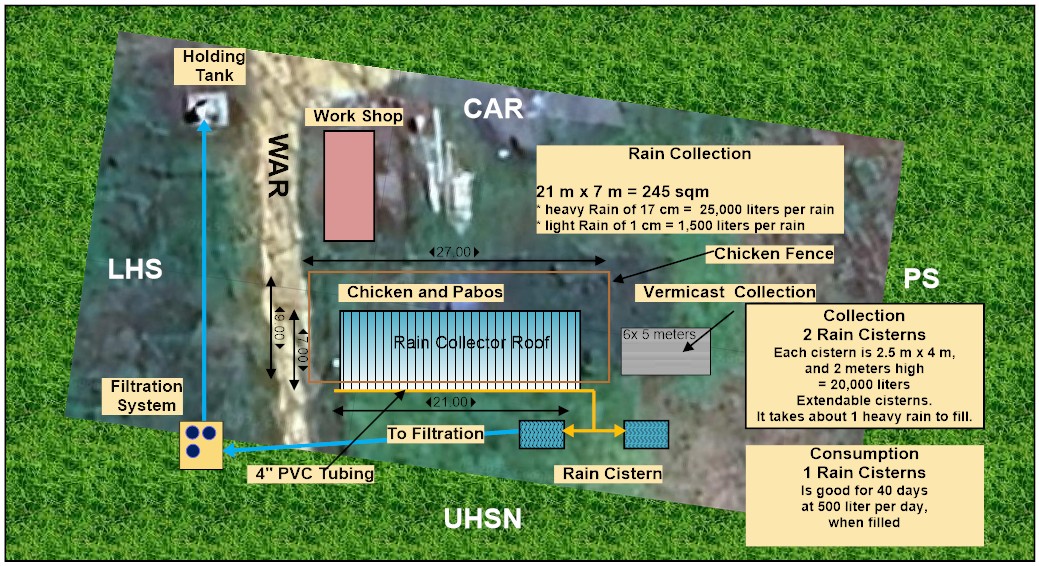
Legends:
WAR = West Access Road
LHS = Lower Hybrid Section
CAR = Central Area Roads
PS = Pig Section
NHSN = Northern Hybrid Section, North
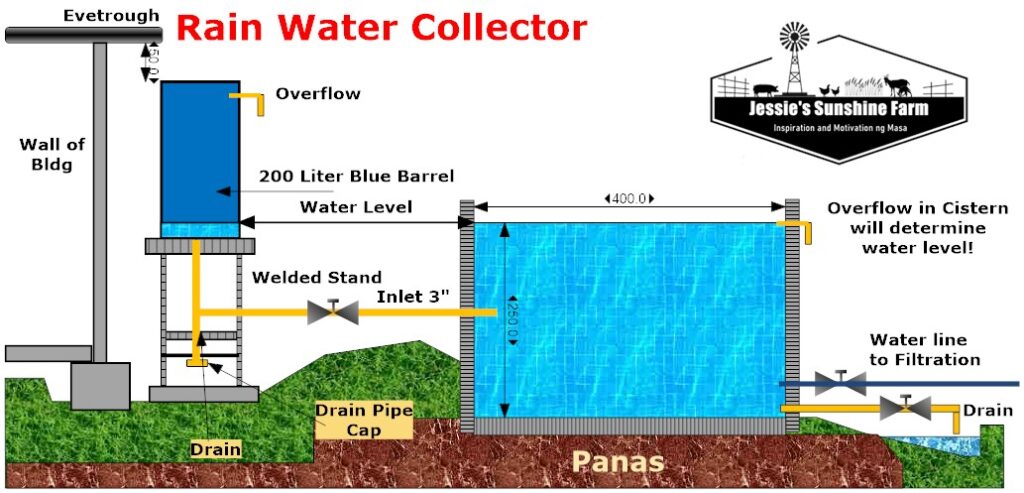
An overview of the area. It is a top of our hill and can feed the filtration system by gravity!! The filtration System is existing and is currently being fed by barangay water. There is a differential Pressure Pump at the holding tank to provide solid water pressure.
Given the frequent rainfall in the area, with an average of 5-6 days per week, the potential for water collection is significant. Even light rain events, resulting in 1-2 cm of water accumulation, can contribute to the overall water supply. Heavy rainfall, occurring at least once a week, can yield up to 17 cm of water, offering a substantial volume for collection.
Water Volume Calculation
The proposed rainwater harvesting system is designed to maximize water collection. The calculation below demonstrates the potential water yield:
Collector Area: The collector area is 7 meters wide by 21 meters long, totaling approximately 147 square meters.
Water Volume: Based on a 17 cm rainfall event, the potential water collection is calculated as: 7 m×21 m×0.17 m×1000 liters/ cubic meter = 24,990 liters
Water Usage Estimate
The collected rainwater can be utilized for various purposes, including:
Showers: 100 liters
Cooking and Dishes: 20 liters
Laundry: 100 liters
Construction: 50 liters (variable)
Livestock and Gardening: 230 liters
Losses: Accounting for line losses and leaks
A daily usage rate of 500 liters is deemed realistic for the initial phase of the project. This approach ensures a sustainable and self-sufficient water supply, reducing dependency on unreliable external sources.
This Takeout might increase to 1,000 liters a day when the piggery is coming on and some of the tourist soak baths. Later we can simply build a second cistern and interconnect them, or we divide the takeout days by 2 to get the existing reservoirs capacity.
Cistern Capacity:
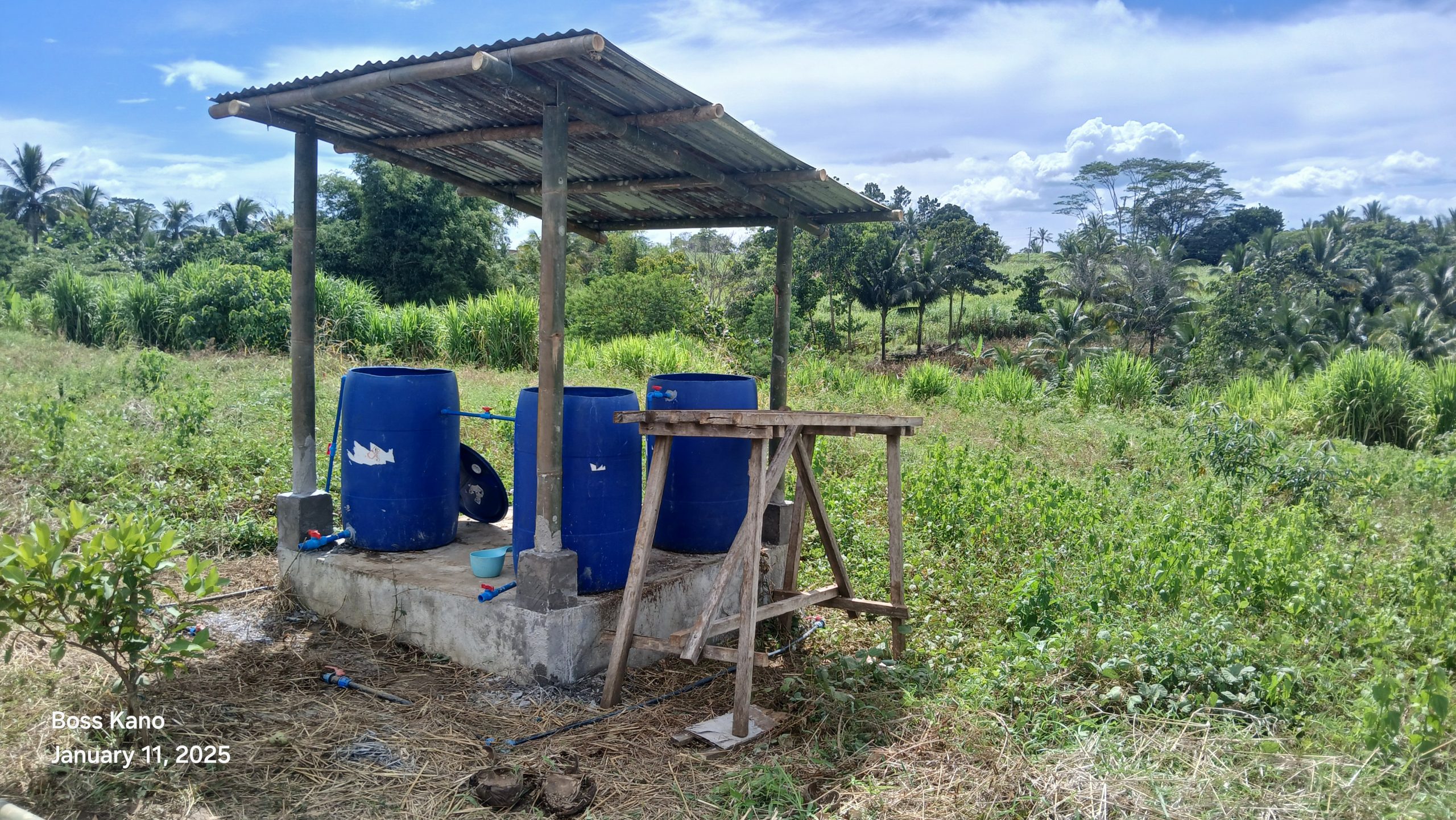
Our cistern will be 1 meter underground sandstone permitting. And above ground for another 1 meters. The area will be 4 meters by 2.5 meter, square. It will contain rebar in every hallow block, and a horizontal in each of the 10 layers. 10 mm deemed good enough and is standard here. Finishing will be done with Sahara cement. This volume gives us 20 cubic meters, or 20,000 liters. We can already see that one heavy rain will fill it completely or at least within one week of little rain!!
Also, to bring another thought into the math here, we can, as said before, always build another cistern beside it and couple both together. That effort would result in 40,000 liters to feed our filtration system. At a rate of 500 liters a day, this would cover 80 days, or more than two months of no rain. Or when doubled to two cisterns, plus with a doubled rate of consumptions it would also last for 40 days only. Even in the last El Nino we had some rain in two months.
Just imaging that 20,000 liters of rain in the pabo area have a weight of 1 kg per liter, which results in a total weight of 20 tons of water.
Cost Calculations:
Hallow Blocks, HB.
In a 2 meters high cistern we need 2.0 m / 0.2 meters = 10 layer or piles. One layer is 4.0 m time two, plus 2.5 m times two = 13 meters. All hallow blocks needed are 10 layers times 13 meters divided by 0.4 meters (the length of one HB) = 325 HB. Since we will use TWO walls due to the enormous water pressure we will time two the HBs. These are 650 HB, add 5% for breakage = 680 HB at 12 pesos a piece (Bukidnon delivered 2025) = 8,160 PHP.
Rebar, or 10 mm
Since we put a vertical 10 mm every 40 cm in the wall, we have 13 m / 0.4 +1 = 33.5 x 2 meters vertical height = 67 meters vertical rebars = 11 pieces at 145 pesos = 1,600 PHP.
Each layer will get a horizontal rebar with an overlapping of 6 times 20 cm each. These are 2 full length at 6 m each plus 1.2 m overlap = 13.2 m times 10 layers =132 meters. These are 132 / 6 m = 22 pieces of rebar 10 mm = 3,200 PHP.
We time this by four due to the fact that we have two instead of one wall, doubled up wall, and the chambers will be filled with mortar. Plus finishing. 16 sacks of cement at 217 PhP each = 3,500 PhP
2 tons of coarse sand screened sand. We still have more than enough. But a load of 17 cubic meters is about 20,000 PhP
Labor is calculated as
Digging 2 MD
Piling 3 MD
Rebar and filling 1 MD
Finishing 3 MD
Pipe Install 1 MD
Total of 10 Man Days, add two, one week total = 6,000 PhP for two guys
Roofing Material
Bamboo
The collector roof will have 21 meters length divided by 3 meter distance per posts plus one = 8 posts. This makes 16 posts in total plus 8 rafters with 1 meters overlapping on each end. The rows are 5 meters apart. Rafters are about 7 meters long. Needed cement are 3 sacks at 3 x 217 PhP = 650 PHP
Roofing sheets
21 meters divided by 75 cm of useable coverage width = 28 sheets per length. We need three rows of them. 28 x 3 = 84 sheets at 180 PhP (Bukidnon 2025) = 15,120 PhP
Labour
One week, two guys = 6,000 PhP
Conclusion:
Total Material costs are 32,500 PhP
Total Labor costs are 12,000 PhP
Total Costs are about 40,000 PhP
Recovering of invested capital
At the today’s rate of usage, 40,000 PhP / 400 PhP = 100 months, but when goats and pigs and swimming pools join the entertainment we cut it down to 40 or 50 months. Plus the advantage is independence from systems that are not working as they should.
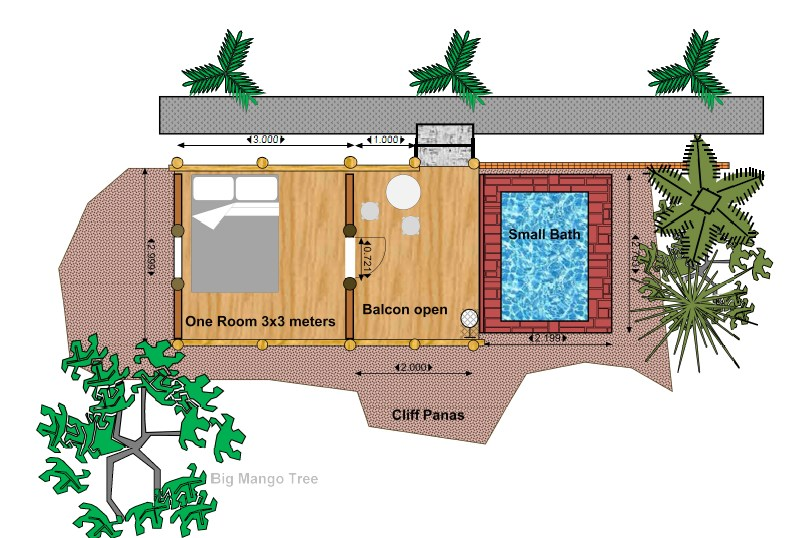
Hey there, fellow nature lovers and adventure seekers! 🌿 I’ve got some thrilling news to share about our little slice of paradise. We’re gearing up to build the first Cottage, and it’s going to be a fantastic addition to our farm experience!
Location, Location, Location!
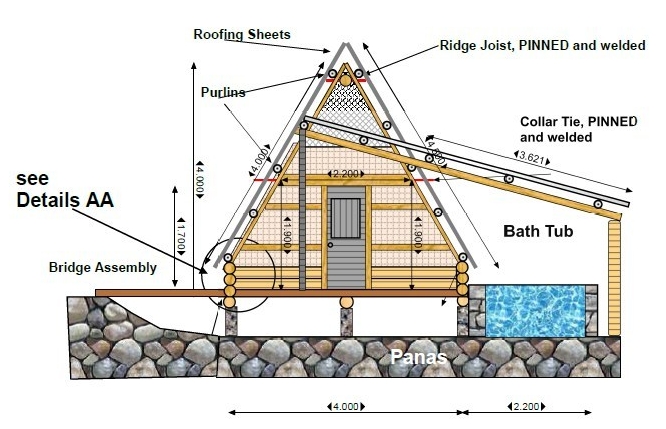
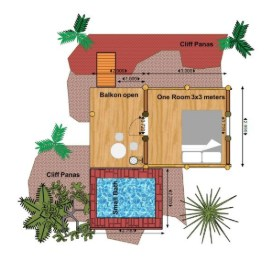
The first Cottage is nestled on the West Cliff , a perfect spot for relaxation and enjoying nature. But wait until you hear about the second one! This new A-Frame Bamboo Cottage cuddles under the Mango Tree of the White Lady. This place has a breathtaking views of the coconut trees swaying in the valley below. Indeed, imagine sipping your morning coffee while soaking in the stunning scenery!
A Cozy Retreat
This Cottage isn’t just about the views. In contrast, it’s designed for comfort and relaxation. Here’s what you can expect:
Size: The Cottage will measure 4×4 meters, providing a cozy space for you to unwind.
Patio: It will feature an 8 sqm patio (or Balcon) where you can lounge and soak up the sun.
Soaking Bath: We’re adding a small soaking bath sourced by rainwater, perfect for those sunset moments. Picture yourself relaxing in the tub as the sky transforms into a canvas of colors!
Nature’s Privacy Screen
In just a year, the surrounding trees will grow to create a beautiful privacy screen, making your stay even more intimate. You’ll feel like you’re in your own little world, away from the hustle and bustle. Plus, our friendly goats will be nearby, adding to the charm of the animal farm experience. It’s like a mini getaway where you can connect with nature and animals! It emphasizes Life in the Province.
Rain or Shine
Worried about the weather? Don’t be! The soaking tub and patio will be covered by a roof, allowing you to enjoy your retreat even when it’s raining. Whether it’s a sunny day or a cozy rainy afternoon, you’ll have the perfect spot to relax and recharge.
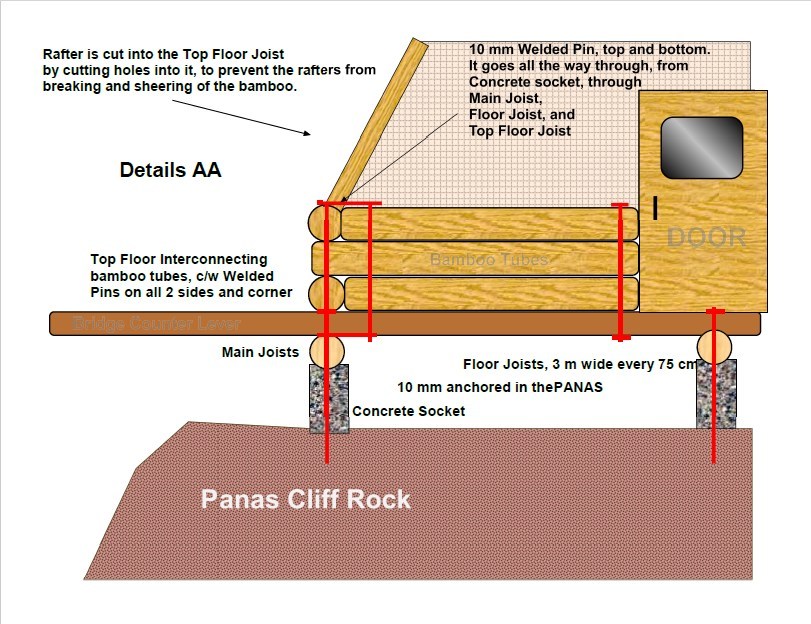
Details for Welding the Corners
All corners and also wall assemblies will be pinned and welded with 10 mm to prevent wind and sheer forces from moving elements. Here is how we do it.
Join Us on This Journey!
We’re super excited about this new Cottage and can’t wait to welcome you to this unique experience. It’s all about creating a space where you can escape, unwind, and enjoy the beauty of nature. So, keep an eye out for updates as we bring this vision to life!
What do you think? Are you excited to visit the new Cottage? Let me know your thoughts or any questions you might have! 🌅
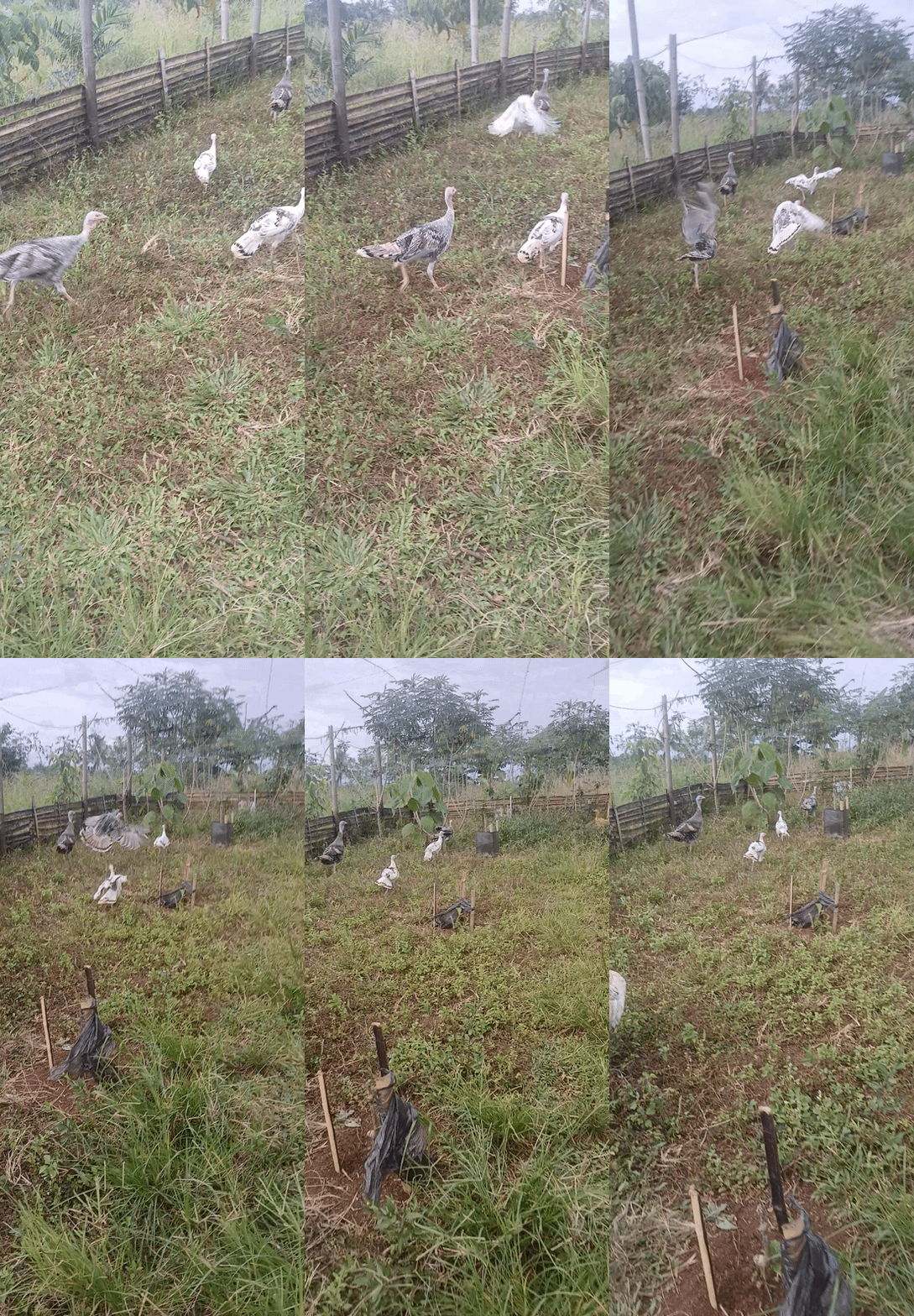
Welcome, poultry enthusiasts and curious cluckers! 🐔 Are you on a quest for the ultimate intel about our fabulous chickens and turkeys? Well, you’ve pecked your way to the right place!
Here’s the scoop on where to find all the juicy details about our feathered friends:
Turkey Talk: If you’re more of a turkey person, don’t worry! We’ve got plenty of gobble-worthy info waiting for you.
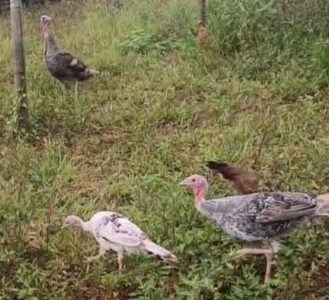
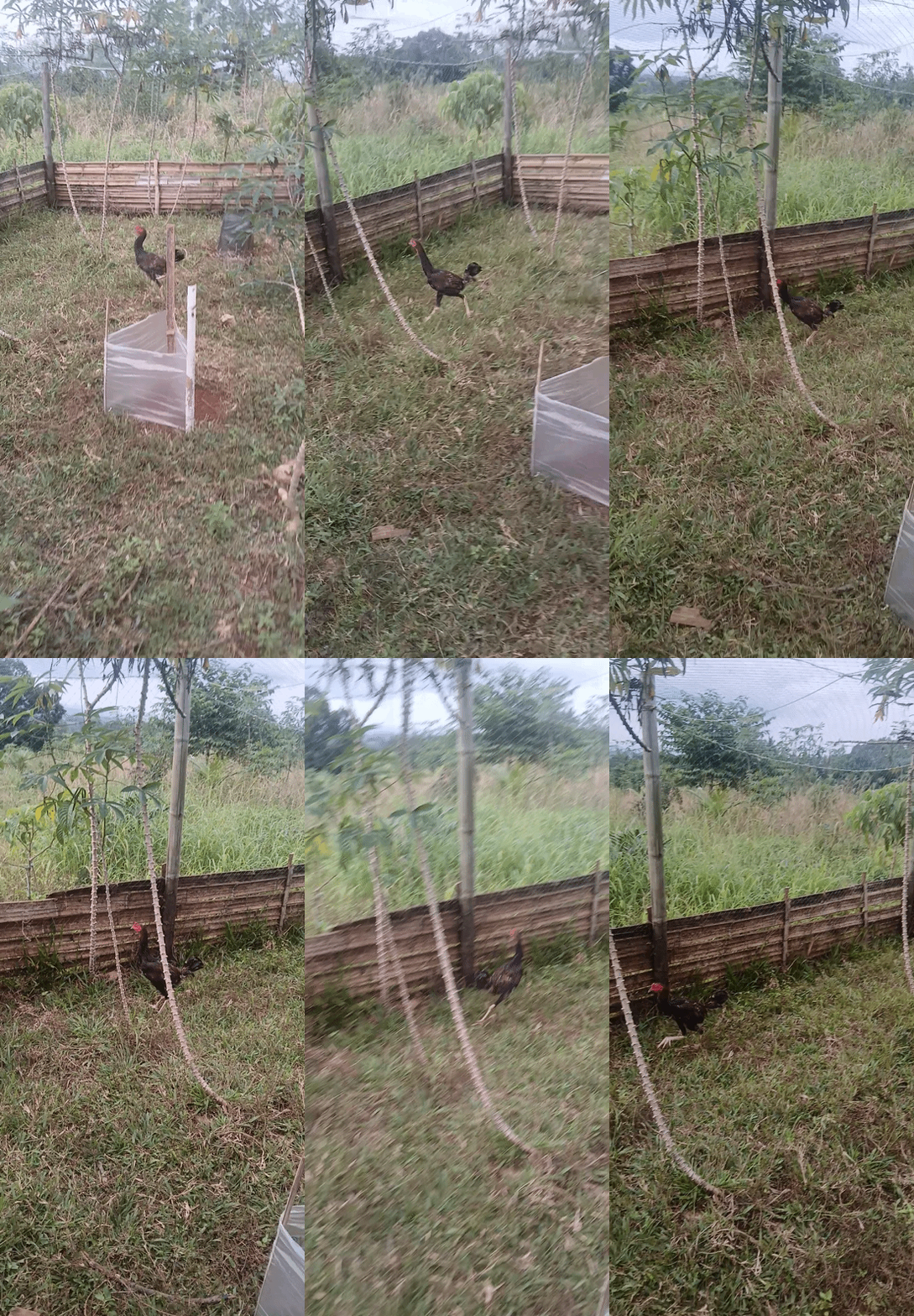
The Chicken and Turkey Project: This is your golden egg of information! Dive into our new page dedicated to the chicken project. It’s like a treasure map, but instead of gold, you’ll find everything you need to know about our free-running chickens and poults.
Feathered Fun Facts: Did you know that chickens can recognize over 100 faces? They’re not just pretty beaks; they’re also social butterflies (or should we say, social chickens?).
So, whether you’re looking to raise your own flock or just want to admire their feathery charm from afar, our page is the place to be!
Now, what are you waiting for? Go ahead and explore! And if you have any questions or need more clucking good info, just ask! 🦃✨
Cookie Consent
We use cookies to improve your experience on our site. By using our site, you consent to cookies.
Contains information related to marketing campaigns of the user. These are shared with Google AdWords / Google Ads when the Google Ads and Google Analytics accounts are linked together.
90 days
__utma
ID used to identify users and sessions
2 years after last activity
__utmt
Used to monitor number of Google Analytics server requests
10 minutes
__utmb
Used to distinguish new sessions and visits. This cookie is set when the GA.js javascript library is loaded and there is no existing __utmb cookie. The cookie is updated every time data is sent to the Google Analytics server.
30 minutes after last activity
__utmc
Used only with old Urchin versions of Google Analytics and not with GA.js. Was used to distinguish between new sessions and visits at the end of a session.
End of session (browser)
__utmz
Contains information about the traffic source or campaign that directed user to the website. The cookie is set when the GA.js javascript is loaded and updated when data is sent to the Google Anaytics server
6 months after last activity
__utmv
Contains custom information set by the web developer via the _setCustomVar method in Google Analytics. This cookie is updated every time new data is sent to the Google Analytics server.
2 years after last activity
__utmx
Used to determine whether a user is included in an A / B or Multivariate test.
18 months
_ga
ID used to identify users
2 years
_gali
Used by Google Analytics to determine which links on a page are being clicked
30 seconds
_ga_
ID used to identify users
2 years
_gid
ID used to identify users for 24 hours after last activity
24 hours
_gat
Used to monitor number of Google Analytics server requests when using Google Tag Manager
1 minute
SourceBuster is used by WooCommerce for order attribution based on user source.
Name
Description
Duration
sbjs_session
The number of page views in this session and the current page path
30 minutes
sbjs_udata
Information about the visitor’s user agent, such as IP, the browser, and the device type
session
sbjs_first
Traffic origin information for the visitor’s first visit to your store (only applicable if the visitor returns before the session expires)
session
sbjs_current
Traffic origin information for the visitor’s current visit to your store
session
sbjs_first_add
Timestamp, referring URL, and entry page for your visitor’s first visit to your store (only applicable if the visitor returns before the session expires)
session
sbjs_current_add
Timestamp, referring URL, and entry page for your visitor’s current visit to your store
session
sbjs_migrations
Technical data to help with migrations between different versions of the tracking feature