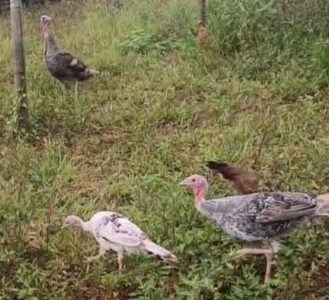
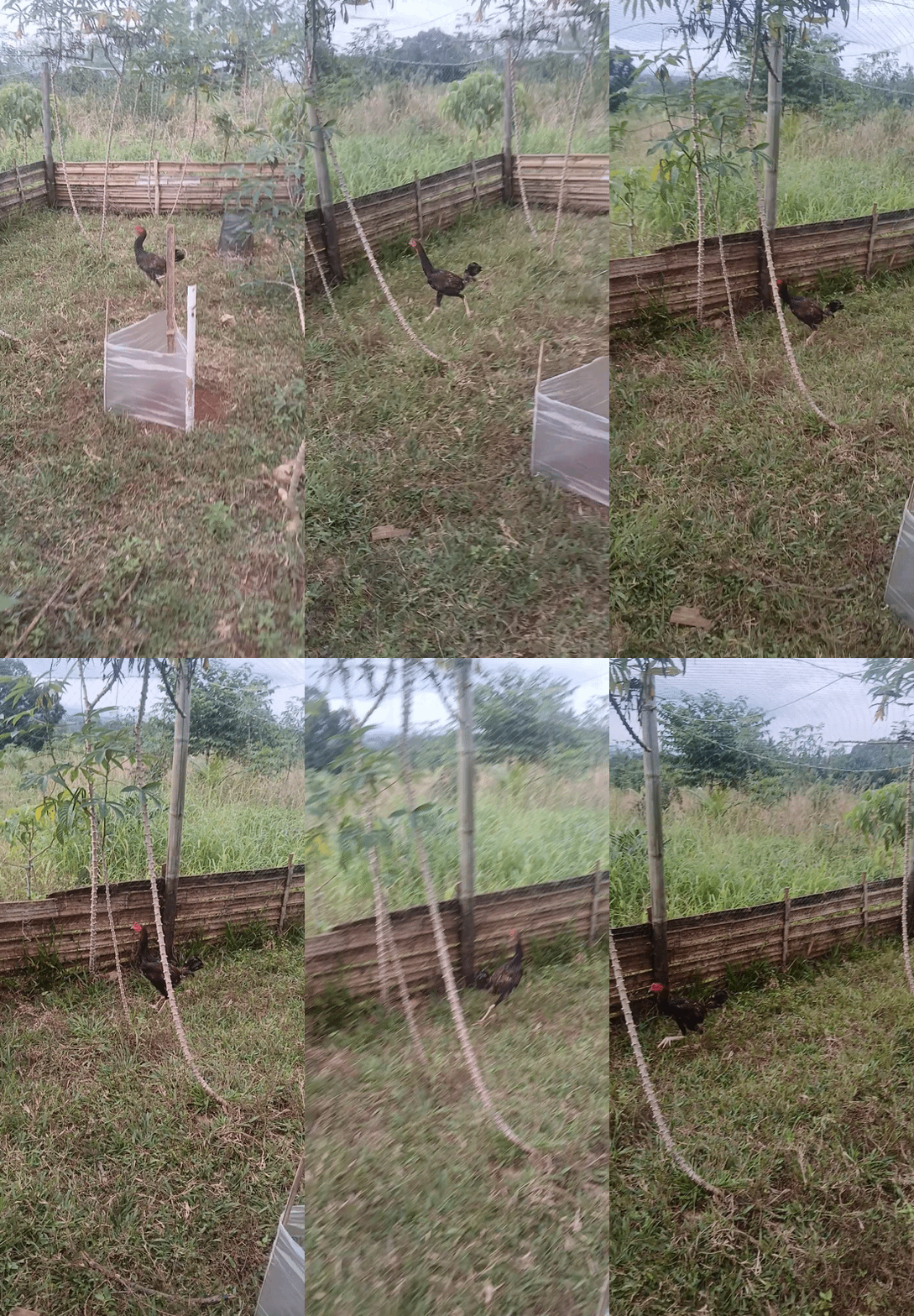
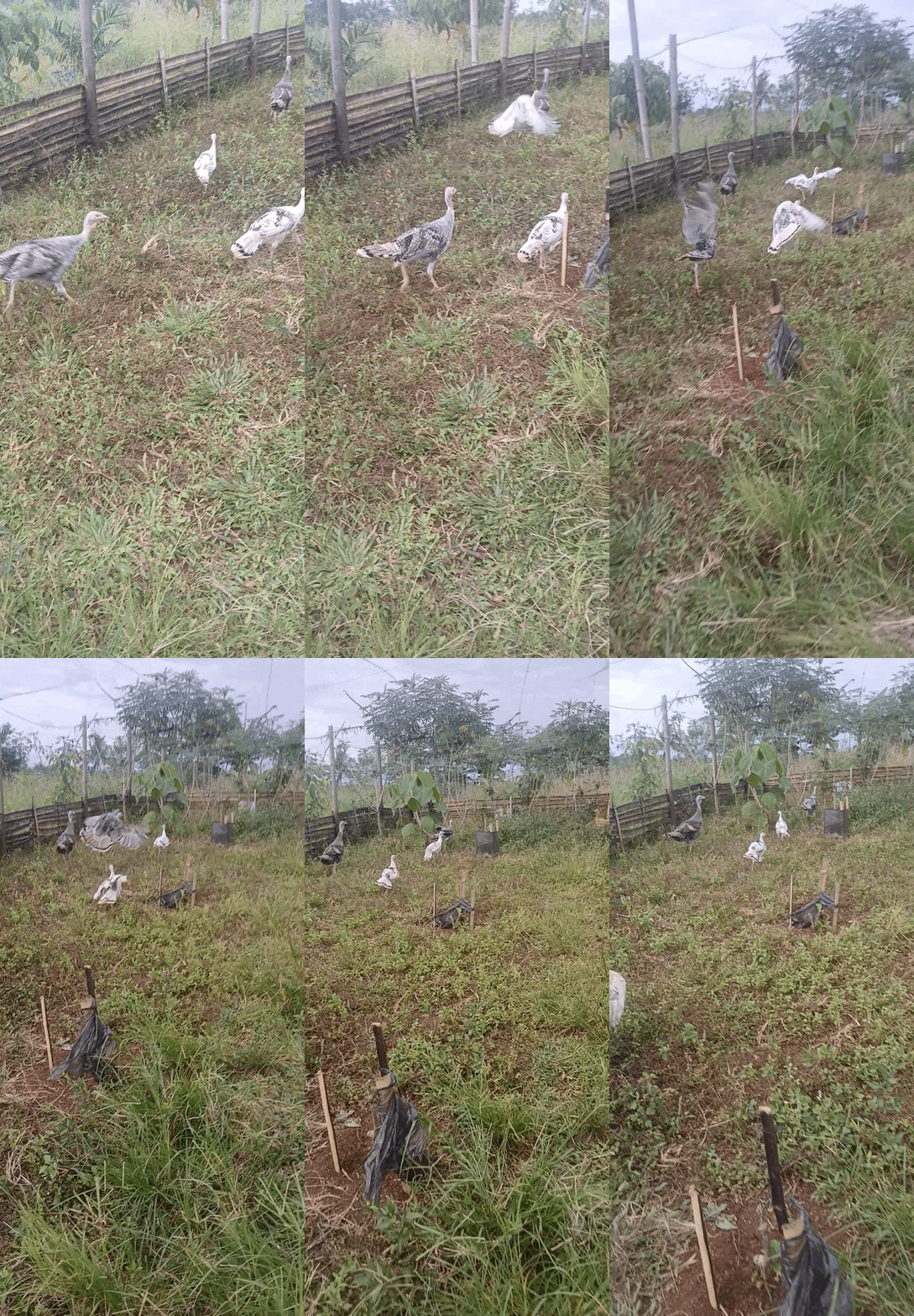
Welcome, poultry enthusiasts and curious cluckers! 🐔 Are you on a quest for the ultimate intel about our fabulous chickens and turkeys? Well, you’ve pecked your way to the right place!
Here’s the scoop on where to find all the juicy details about our feathered friends:
Turkey Talk: If you’re more of a turkey person, don’t worry! We’ve got plenty of gobble-worthy info waiting for you.
The Chicken and Turkey Project: This is your golden egg of information! Dive into our new page dedicated to the chicken project. It’s like a treasure map, but instead of gold, you’ll find everything you need to know about our free-running chickens and poults.
Feathered Fun Facts: Did you know that chickens can recognize over 100 faces? They’re not just pretty beaks; they’re also social butterflies (or should we say, social chickens?).
So, whether you’re looking to raise your own flock or just want to admire their feathery charm from afar, our page is the place to be!
Now, what are you waiting for? Go ahead and explore! And if you have any questions or need more clucking good info, just ask! 🦃✨
The land, a source of life and livelihood, is often a silent battleground. On our farm, nestled in the hills, this battle is fought daily against the relentless forces of erosion. The past few months have been a stark reminder and wake up call of nature’s power, as the soil, our most precious resource, slips away with every heavy rainfall. The scale of the problem is undeniable.
We’re losing an estimated 6 inches of soil each year. This isn’t just a statistic; it’s a visible reality. Roads are being swamped with sediment, and the roots of our coconut trees, once safely buried, are now exposed. In a matter of a decade, we fear our once-fertile hill will be barren. The situation is more than just a threat to our income; it’s a threat to our future.
Our young coconut trees, the promise of tomorrow, are particularly vulnerable. We’ve invested months in planting them, but their tender roots are no match for the forces of nature.
To combat this, we’ve embarked on a multi-pronged approach. We are building a drainage system to channel the water, and we are embracing terracing to slow down the flow. Planting vegetation has been a crucial step, but the young trees are still struggling. The most dramatic illustration of the problem comes during heavy rains. Then, our roads transform into raging creeks, torrents of brown water carrying away precious topsoil. The force of the water is immense, carving new channels, deepening and widening existing ones. The West Cliff Section, WCS, , in particular, has become a focal point of our struggles. During one especially violent storm, the saturated soil gave way, triggering a landslide. The earth, once firm, became a churning mass of mud and debris, cascading down the slope. The impact was devastating, not only taking away more of our precious land but also exposing the danger of slides and erosion, and creating a visible scar on the landscape. In the face of such challenges, it’s easy to feel overwhelmed.
Yet, the Bible reminds us in Genesis 1:28 that we are called to “fill the earth and subdue it.” This call is not just about exploitation; it’s about stewardship. It’s about caring for the land, recognizing its value, and working to protect it. Just as the parable of the sower teaches us about tending to the soil of our hearts, so too must we tend to the soil beneath our feet. We must continue to plant, build, and protect, trusting that even in the face of adversity, there is hope for renewal and a future harvest. The work is hard, but the promise of a fruitful land, sustained by our efforts and blessed by God Almighty, keeps us going.
Completion of Sector and Road Mapping. Coconut Tree Planting Finished.
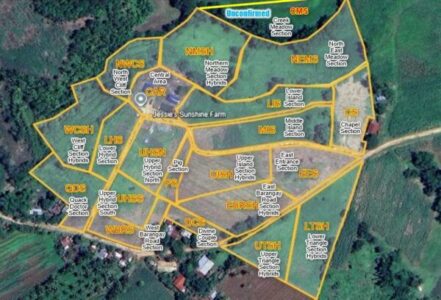
We are pleased to announce the successful completion of our Sector and Road Mapping project. All of our roads and sectors have boundaries and names. This initiative has allowed us to systematically name and organize all sectors and roads within our operational area, enhancing our precision and efficiency in management.
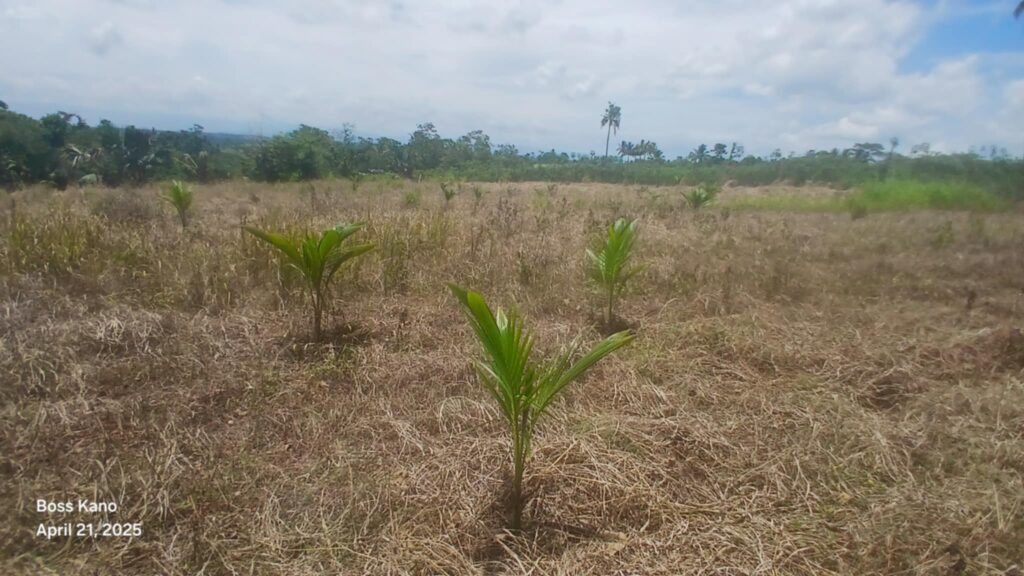
In addition to this achievement, we are proud to report that we have successfully planted a total of 790 coconut trees. About 500 of them are hybrids. This milestone reflects our commitment to sustainable agricultural practices and environmental stewardship. Each tree has been meticulously categorized and logged into our system, ensuring comprehensive tracking and management.
The dimensions of this project not only highlight our dedication to organization but also our proactive approach to enhancing agricultural productivity. We look forward to the positive impact these efforts will have on our community and the environment.
We thank all neighbors, far and near, for their continued support as we strive for excellence in our initiatives.
Erosion is a persistent challenge that many of us face, especially in areas where heavy rainfall is common. It’s estimated that about 6 inches of soil is washed away each year o our farm, and this figure resonates with what I’ve observed in my own surroundings. The impact is particularly evident in our coconut groves, where the trees stand barren, their nuts exposed to the elements. This exposure creates a buffet for rats, who eagerly feast on the sweet meat inside the nuts, leading to the premature death of the plants before they can establish themselves.
The Strategy
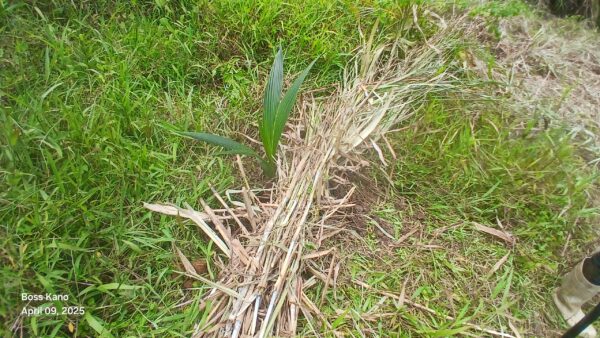
To combat this, we’ve developed a strategy that combines both traditional knowledge and practical solutions. Surrounding each coconut nut with four pegs and embedding a protective barrier of Napier Grass is our first line of defense. But it’s the addition of long lines of Napier grass following the contour of the slopes, along the cliff that truly makes a difference. The grass acts as a natural barrier against the relentless force of rainwater. When the rain falls, it carries soil downhill, but where we’ve laid down the grass, the water slows down. This deceleration allows the soil to settle, effectively creating a mini-reservoir of nutrients that would otherwise be lost.
Building Terraces over Time
The beauty of this method lies in its simplicity and effectiveness. The grass acts as a filter, allowing water to pass through while capturing soil particles. As the water flows, it picks up new soil from the areas below, cleans that area and levels is. The soil is then carried to the next barrier we’ve established. This creates a cascading effect, where each layer of grass and soil works together to retain what would otherwise be washed away. It will build terraces over time, nice straightened lines following the contour of the slopes.
In essence, we’re not just fighting erosion; we’re reshaping the landscape itself. By creating terraces, we’re not only retaining soil but also leveling the land after the retaining barriers. This approach not only helps in soil conservation but also enhances the overall health of our coconut trees. It’s a delicate balance of nature and human intervention, where we learn to work with the environment.
Land Preservation and Conservation
As I reflect on these practices, it’s clear that the fight against erosion is not just about preventing loss; it’s about fostering a sustainable ecosystem that supports our crops and livelihoods. Each step we take, from surrounding the nuts to planting grass, contributes to a larger goal of maintaining the integrity of our land. It’s a continuous journey, one that requires vigilance and adaptation, but the rewards—healthy coconut trees and a thriving landscape—make it all worthwhile.
What are your thoughts on these methods? Have you seen similar practices in your area?
Planting Hybrid Coconut Trees at West Cliff: A New Adventure!
Hey everyone! 🌴 Today, I’m excited to share our latest project at the West Cliff, where we’re diving into the world of hybrid coconut tree planting. It’s been a journey filled with planning, adjustments, and a sprinkle of creativity, and I can’t wait to fill you in on all the details!
The Layout Change
First off, let’s talk about the layout. We decided to reduce the distance between the trees from 9 meters to 8 meters. Why? Well, we wanted to maximize our space on the terrace-like slope of the cliff. By pushing for a triangular layout, we’ve managed to fit more trees into the area without compromising their growth potential. It’s all about making the most of what we have!
Sunlight Challenges
Now, here’s the catch: the 20-meter cliff above us means that sunlight will be a bit limited. With the growth on top of the cliff, we know our coconut trees might not get as much sun as they ideally need. But hey, we’re optimistic! We’ll take whatever sunlight we can get and adapt as the trees grow. After all, nature has a way of surprising us!
Planning for the Future
We’re also thinking ahead. As part of our layout, we’ve made sure to accommodate a future road into this section. This will not only make access easier but also help with maintenance down the line. And speaking of maintenance, we could really use some help here—if anyone has an excavator lying around, we’d love to borrow it! 😉
Erosion Control Efforts
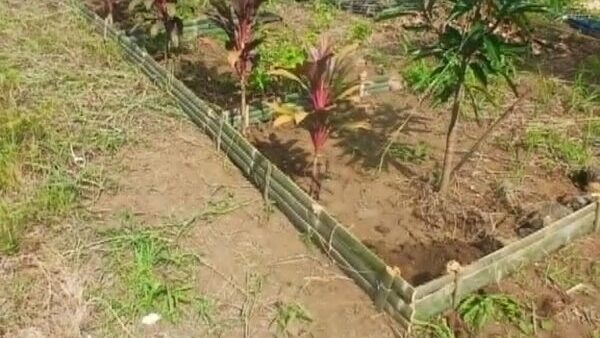
On top of all that, we’re making strides in erosion control. We’ve started forming small natural retaining walls around the coconut trees. This is crucial because it helps stabilize the soil on the hill, allowing it to settle and increase nutrient content over time. Healthy soil means happy trees!
A New Landscape Awaits
Our ultimate goal is to create a beautiful new landscape that thrives in this unique environment. It’s a long-term vision, but we’re committed to nurturing these trees and watching them grow. Stay tuned for our next video clip, where we’ll share more about our progress and the exciting changes happening at West Cliff!
Thanks for following along on this journey with us. If you have any questions or tips about coconut tree planting, drop them in the comments! Let’s keep the conversation going! 🌱
Please Share our Content
Cookie Consent
We use cookies to improve your experience on our site. By using our site, you consent to cookies.
Contains information related to marketing campaigns of the user. These are shared with Google AdWords / Google Ads when the Google Ads and Google Analytics accounts are linked together.
90 days
__utma
ID used to identify users and sessions
2 years after last activity
__utmt
Used to monitor number of Google Analytics server requests
10 minutes
__utmb
Used to distinguish new sessions and visits. This cookie is set when the GA.js javascript library is loaded and there is no existing __utmb cookie. The cookie is updated every time data is sent to the Google Analytics server.
30 minutes after last activity
__utmc
Used only with old Urchin versions of Google Analytics and not with GA.js. Was used to distinguish between new sessions and visits at the end of a session.
End of session (browser)
__utmz
Contains information about the traffic source or campaign that directed user to the website. The cookie is set when the GA.js javascript is loaded and updated when data is sent to the Google Anaytics server
6 months after last activity
__utmv
Contains custom information set by the web developer via the _setCustomVar method in Google Analytics. This cookie is updated every time new data is sent to the Google Analytics server.
2 years after last activity
__utmx
Used to determine whether a user is included in an A / B or Multivariate test.
18 months
_ga
ID used to identify users
2 years
_gali
Used by Google Analytics to determine which links on a page are being clicked
30 seconds
_ga_
ID used to identify users
2 years
_gid
ID used to identify users for 24 hours after last activity
24 hours
_gat
Used to monitor number of Google Analytics server requests when using Google Tag Manager
1 minute
SourceBuster is used by WooCommerce for order attribution based on user source.
Name
Description
Duration
sbjs_session
The number of page views in this session and the current page path
30 minutes
sbjs_udata
Information about the visitor’s user agent, such as IP, the browser, and the device type
session
sbjs_first
Traffic origin information for the visitor’s first visit to your store (only applicable if the visitor returns before the session expires)
session
sbjs_current
Traffic origin information for the visitor’s current visit to your store
session
sbjs_first_add
Timestamp, referring URL, and entry page for your visitor’s first visit to your store (only applicable if the visitor returns before the session expires)
session
sbjs_current_add
Timestamp, referring URL, and entry page for your visitor’s current visit to your store
session
sbjs_migrations
Technical data to help with migrations between different versions of the tracking feature